
Google Associate Cloud Engineer Exam Associate-Cloud-Engineer Exam Questions
Preparing for the Associate-Cloud-Engineer exam is simple with ExamsTeacher. We offer easy-to-understand study materials that help you learn the most important exam topics. You can study using our PDF questions, practice online with a real exam-style test, or use the desktop practice software. Choose the study method that works best for you and prepare at your own pace.
At ExamsTeacher, we keep our Associate-Cloud-Engineer practice questions up to date. Whenever the exam syllabus or objectives change, we update our study materials so you always learn the latest topics. This helps you save time, avoid outdated content, and feel more confident when you take your exam.
Youare configuring Cloud DNS. You want !to create DNS records to pointhome.mydomain.com,mydomain.com. andwww.mydomain.comto the IP address of your Google Cloud load balancer. What should you do?
Correct Answer: C
You want to deploy a new containerized application into Google Cloud by using a Kubernetes manifest. You want to have full control over the Kubernetes deployment, and at the same time, you want to minimize configuring infrastructure. What should you do?
Correct Answer: B
You want to select and configure a cost-effective solution for relational data on Google Cloud Platform. You are working with a small set of operational data in one geographic location. You need to support point-in-time recovery. What should you do?
Correct Answer: A
[Reference: https://cloud.google.com/sql/docs/mysql/backup-recovery/restore, , https://cloud.google.com/sql/docs/mysql/backup-recovery/pitr#disk-usage, , ]
You are building a pipeline to process time-series data. Which Google Cloud Platform services should you put in boxes 1,2,3, and 4?
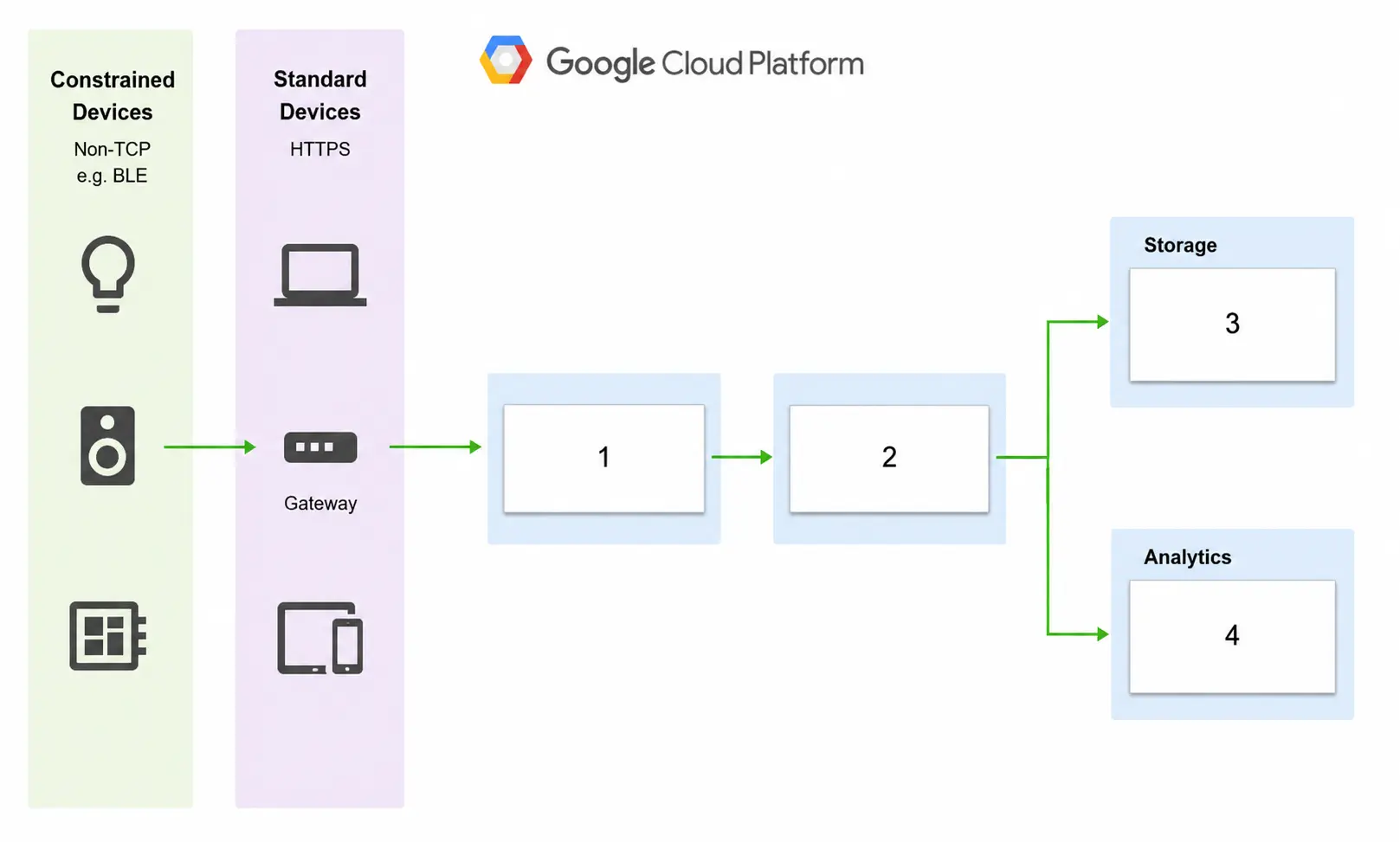
Correct Answer: D
[Reference: https://cloud.google.com/solutions/correlating-time-series-dataflow, , https://cloud.google.com/blog/products/data-analytics/handling-duplicate-data-in-streaming-pipeline-using-pubsub-dataflow, https://cloud.google.com/bigtable/docs/schema-design-time-series, , ]
You are performing a monthly security check of your Google Cloud environment and want to know who has access to view data stored in your Google Cloud
Project. What should you do?
Correct Answer: B
https://cloud.google.com/logging/docs/audit